Commentary: Maybe there is no such thing as too many BTO flats?
Advertisement
Commentary
Commentary: Possibly there is no such thing as too many BTO flats?
Could contempo moves to ramp up supply of BTO HDB flats in Singapore lead to a glut? NUS Institute of Real Estate and Urban Studies' Lee Nai Jia and Sing Tien Foo explain why this is unlikely.
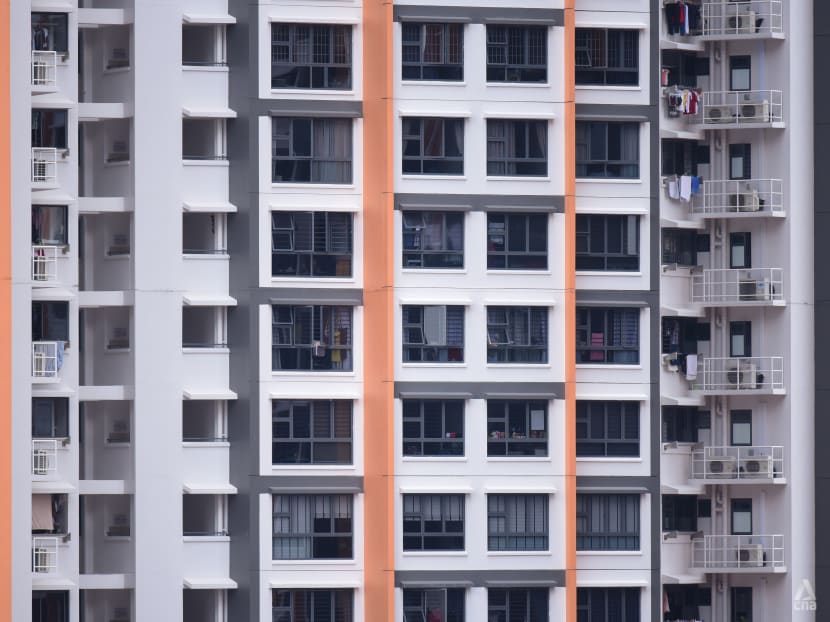
A block of flats in Clementi. (Photo: Gaya Chandramohan)

SINGAPORE: When the Housing Development Board (HDB) launched a batch of Build-To-Order (BTO) flats in Hougang in August, 11,420 applicants competed for 460 four-room units.
The over-subscription rate was 25 times for 4-room flats – 1 of the largest for a non-mature manor in contempo years. In particular, Kovan Wellspring, side by side to Kovan MRT station, attracted strong interest.
Earlier in May, 3,474 applicants vied for 70 Telok Blangah Beacon 4-room flats near the future Greater Southern Waterfront – an oversubscription rate of almost l times .
Both speak to the strong demand for BTO flats, more than largely reflected in the average over-subscription charge per unit by first-timers for three-room and bigger units of 4.ane and 4.7 times in 2022 and 2022 respectively.
Perhaps foreseeing that the pandemic is unlikely to temper continued interest in housing, Minister for National Development Desmond Lee announced in July that HDB will launch more than than 17,000 BTO units in 2022.
This is higher than the 14,600 units in pre-COVID 2022 and the 16,800 in 2020.
Highlighting that HDB has added BTO flats to the housing stock over the years to come across the needs of immature families including echo boomers and millennials, Mr Lee's announcement, all the same, begs the question of whether this boost in supply might consequence in a glut if demand for BTO flats cools.
Wouldn't most prospective home buyers simply turn to the resale market place if delays in housing structure continue?

If and then, might the launch of more than 17,000 flats be an overestimation of hereafter need, with the possibility that HDB might be saddled with empty flats no one needs?
Potent PUBLIC HOUSING Need A LONG-TERM Trend PRECEDING COVID-19
Then once again, this strong demand for public housing has been a decades-long trend preceding COVID-nineteen, to the point where HDB had to shift away in 2022 from its policy of waiting for 70 per cent of flats to be booked earlier starting structure.
This had the effect of cooling the resale HDB market place, setting information technology on a more sustainable footing and making first-fourth dimension public homeownership more affordable for larger swaths of the Singapore population.
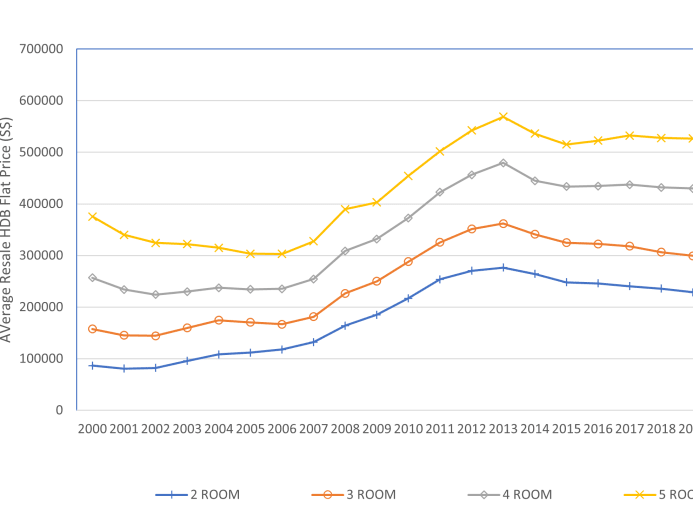
That need is unlikely to collapse altogether considering of construction delays.
Habitation buyers less willing to wait might explore other options should doubtfulness over BTO projects persist. Analysts accept indeed observed many prospective applicants turning to the resale market afterward projected delays to the completion of launched BTOs were first appear.
Only this switch-over of those who tin afford a resale apartment is unlikely to hurt the market for new HDB flats. BTO application rates for first- and second-timers in 2022 continued to surge even after the news.
In total, more than 100,000 applied for 15,344 BTO units every bit of Baronial.

In fact, it is fortuitous HDB is taking a multi-prong approach to footstep up supply while also providing rental flat options for couples impacted by the BTO delays.
The supply concatenation disruption and the labour crisis in the structure industry arising from travel bans take hit the public housing market hard.
Many BTO projects have already been delayed past at least 6 months. Contempo BTO projects, such as the Queen's Arc at Queensway, now accept a waiting fourth dimension of six years with completion expected only in 2027.
There are also limits to how much supply can be ramped up without straining the structure industry.
Already with 89,000 units nether construction in 2019, more new launches could stretch the already tight chapters of this sector, which has seen GreatEarth, a primary contractor for five projects go bust.
P eople aspire to proceed with life plans, with new marriages each year remaining at an boilerplate of about 23,700 over the last three years.
In this context, the 17,000 units to exist launched might not be also many.
Perhaps the larger question is whether HDB tin build enough flats to keep upward with Singaporeans' clamorous appetite for public housing. Information technology's little wonder why BTOs remain a master housing option, when dwelling owners stand up to reap a windfall in selling their heavily subsidised BTO flats.
Bartley Beacon and ParkView@Bidadari, launched in November 2020, saw prices of 5-room flats between S$466,000 and South$598,000 – a steal compared to the ii-yr average resale price of Southward$754,000 for 5-room flats in Toa Payoh with at least a xc-yr lease.
DEMAND FOR BTO OBSCURES BIGGER SHIFTS IN PUBLIC HOUSING
Perhaps the need for BTOs obscures a larger tendency underway for decades: Public housing demand has chastened over the long term as rising affluence and growing aspirations for the adept life has seen more Singaporeans shift into condominiums and other private homes.
The proportion of households in public housing fell from 85.2 per cent to 77.9 per cent over the last ii decades, while those living in private non-landed housing surged from half dozen.3 per cent to 15 per cent over the aforementioned period.
Young HDB homeowners are upgrading to private homes, with the proportion of households beneath 40 in HDB flats declining from 62.3 per cent to 47.6 per cent.
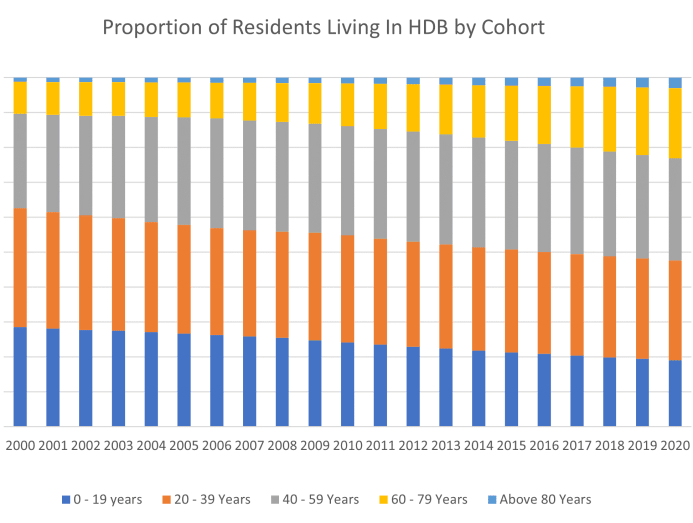
Not-landed private housing units more than doubled between 2000 and 2010, and increased past another 67 per cent between 2010 and 2020. Meanwhile HDB flats saw less than 20 per cent growth in the same period.
The ultra low-interest surround may take been a bigger driving gene for the private market, coupled with the private property price index growth fueling a fear of missing out for long-term investors looking for investment alternatives to equities and futures.
More xvi,270 private residential units were transacted in the first half of 2021, double that in the same period in 2022 before the pandemic.
Indeed, the larger question might exist whether the 17,000 flats to be built fits the preferences of a changing Singapore demography, as households compress but people withal desire space.
The average resident household size for each housing blazon has steadily declined in the last four decades, though a slight uptick was seen in 2020.

Both iv-room and 5-room units constituted the king of beasts's share of resale applications - 41.v per cent and 25.3 per cent respectively, whereas iii-room resale applications remained low at 23.3 per cent.
This aforementioned trend was also reflected in BTO awarding numbers in 2020. Larger four- and 5-bedroom BTO flats made upward 66.9 per cent and eighteen per cent of the total applications, respectively, whereas three-room BTO applications remained pocket-sized at 9.seven per cent.
Why has this been the instance? The shifts towards work-from-home and home-based learning have seen more domicile buyers look for larger homes with dedicated study rooms, bigger bedrooms where workspaces can be prepare, or floorplans with large common spaces that tin can be segregated where needed.
This is a luxury more HDB dwellers tin can beget after household income caps for BTO were raised to South$xiv,000 from S$12,000 in 2019.
A second tendency is the emergence of more singles across age groups – making up 85.ii per cent of those in their 20s and 29 per cent of those in their 30s – suggesting greater future demand for 2-room Flexi flats.
So it seems HDB volition have to strike a balance, factoring in both the strong demand for larger homes from families likewise as the competing desire for smaller flats from singles and seniors.
There is little doubt that the pandemic has exposed the frailties of the atomic number 82-lag relationship between housing need and supply.
Need for BTOs will remain strong as people proceed to make life plans, even if the few who tin afford to will wait to the individual and resale markets.
Building ahead of order to retain redundancies at the macro level and designing flats with more than customisable layouts at the micro level are likely to remain the practice for HDB over the side by side few years.
Dr Lee Nai Jia is Deputy Managing director at the Institute of Existent Estate and Urban Studies (IREUS). Professor Sing Tien Foo is Director at the aforementioned institute and Head of Section of Real Estate at Business School, National University of Singapore. The views and opinions expressed here are those of the authors and do non correspond the views and opinions of the National Academy of Singapore, its subsidiaries or affiliates .
Listen to Sing Tien Foo discuss developments in the belongings market since COVID-xix hit on the Center of the Matter podcast:
Source: https://cnalifestyle.channelnewsasia.com/commentary/bto-delay-hdb-subscribe-resale-condo-private-property-market-covid-19-282781
0 Response to "Commentary: Maybe there is no such thing as too many BTO flats?"
Enregistrer un commentaire